From a Controlled Playground to a Space of Freedom: Rethinking the Digital World for Children
Do the rising global digital restrictions in 2025 protect children, or curtail their freedoms? A critical perspective on the new era of children's digital rights.
Curated and Written by: İpek Kay
A note reflecting on the developments of 2025 through the lens of children’s relationship with the digital world, considering play, movement, public space, and freedom.
The year 2025 may be remembered as a significant turning point in how children exist in the digital world—perhaps even as the end of the “unlimited internet” era. From Australia to Brazil, from the United States to France, governments in many countries have begun to move away from the discourse of a “free internet” and instead construct a highly regulated, security-oriented digital space for children with clearly defined boundaries.
This shift, justified under the premise of “protecting children,” suggests that the digital world is increasingly moving away from being a space of rights for children, and is instead becoming a tightly controlled environment accessible only through strict rules and surveillance.
Phone-Based Childhood and the Loss of Freedom
One of the most widely discussed articles on children’s relationship with the digital world in 2025 was “What Kids Told Us About How to Get Them Off Their Phones”, published in The Atlantic on August 4, 2025. The authors, Lenore Skenazy, Zach Rausch, and Jonathan Haidt, have long studied childhood, parenting, and social transformations. Their research examines children’s relationship with screens not only in terms of “screen time,” but in connection with the freedoms they have in the physical world.
Although the study is based on research conducted in the United States, its findings resonate strongly with childhood experiences in other geographies. According to the research, children do not need more restrictions or surveillance to move away from their phones; rather, they need spaces where they can go outside, act independently, take risks, and even experience boredom.
The article proposes that the increase in screen use should be understood alongside the shrinking of public spaces, the decline of free play, and the limitations placed on children’s ability to move independently in everyday life. This perspective invites us to rethink the screen-freedom debate beyond parental control, and instead through children’s rights to play and movement.
2025: A Global Wave of Restrictions and Control
We can consider 2025 as a critical year marking the transition from a period of “free use” to one of strict regulation and legal restriction in children’s digital lives. Governments worldwide have begun to adopt more aggressive legal measures against risks such as the negative impact of social media on children’s mental health and cyberbullying:
Australia: A law passed at the end of 2024 and enacted on December 10, 2025, bans children under 16 from having social media accounts. This applies to platforms such as Facebook, Instagram, TikTok, and YouTube, with fines of up to 50 million AUD for non-compliance.
China: In April 2025, the “Minor Mode” was introduced, allowing parents to limit screen time, block access between 10 PM and 6 AM, and filter content.
France: Since 2023, parental consent has been required for users under 15; following school violence incidents in 2025, a full social media ban is being considered.
United Kingdom: Under the Online Safety Act, platforms are required to prevent children’s access to harmful and age-inappropriate content.
Brazil: The “Digital ECA” law (September 2025) mandates linking under-16 accounts to parents, implementing robust age verification systems (biometric or ID-based), and banning loot boxes in video games.
United States: Florida’s 2025 HB 3 law bans social media accounts for children under 14 and requires parental consent for those aged 14–15. Similar laws are being introduced in states like Mississippi and Tennessee.
Expanding Surveillance Mechanisms
When considering Australia’s social media bans alongside similar regulations planned in Denmark, France, and Norway, as well as emerging discussions in Turkey, a clear trend becomes visible: children’s presence in the digital world is no longer treated as a “right,” but rather as a “privileged space” accessible only through strict security and age controls.
Experts also emphasize that risks encountered on platforms like Roblox cannot be addressed through isolated platform-based solutions, as harmful content easily circulates across platforms such as Discord and TikTok. This highlights the urgent need for a more holistic, ecosystem-based approach and cross-platform collaboration.
Within this framework, the increasingly widespread control mechanisms can be summarized as follows:
Age Verification
Simply answering “Yes” to the question “Are you over 18?” is no longer sufficient. In countries like Brazil and Australia, platforms are required to estimate real age using methods such as facial recognition, ID verification, or behavioral analysis. While intended to protect children, this approach raises serious concerns about privacy and data protection.
Smartphone Bans in Schools
As of 2025, smartphone use during school hours (including breaks) has been banned in countries such as Greece, Italy, Hungary, and the Netherlands. South Korea has also introduced a ban on digital devices in classrooms, effective March 2026. While these measures aim to improve attention and safety, they also limit the use of digital tools as learning environments. Such exclusionary approaches risk disconnecting education from children’s everyday practices and make it harder to approach digital literacy holistically.
Targeting Addictive Design
Florida and Spain have begun to restrict features such as infinite scroll, autoplay, and push notifications, identifying them as “addictive.” This is a significant and positive step, as it directly questions the design practices and business models of digital platforms.
Where Are the Best Interests of the Child and the Right to Participation?
Although restrictions and bans are implemented under the impulse to “protect,” they create a serious contradiction with children’s rights to freedom of expression and participation. The United Nations Committee on the Rights of the Child, in its General Comment No. 25 (2021) on the digital environment, emphasizes that children’s rights offline must be fully upheld online. It clearly states that protection cannot be used as a justification to limit children’s access to information, freedom of expression, or the right to play.
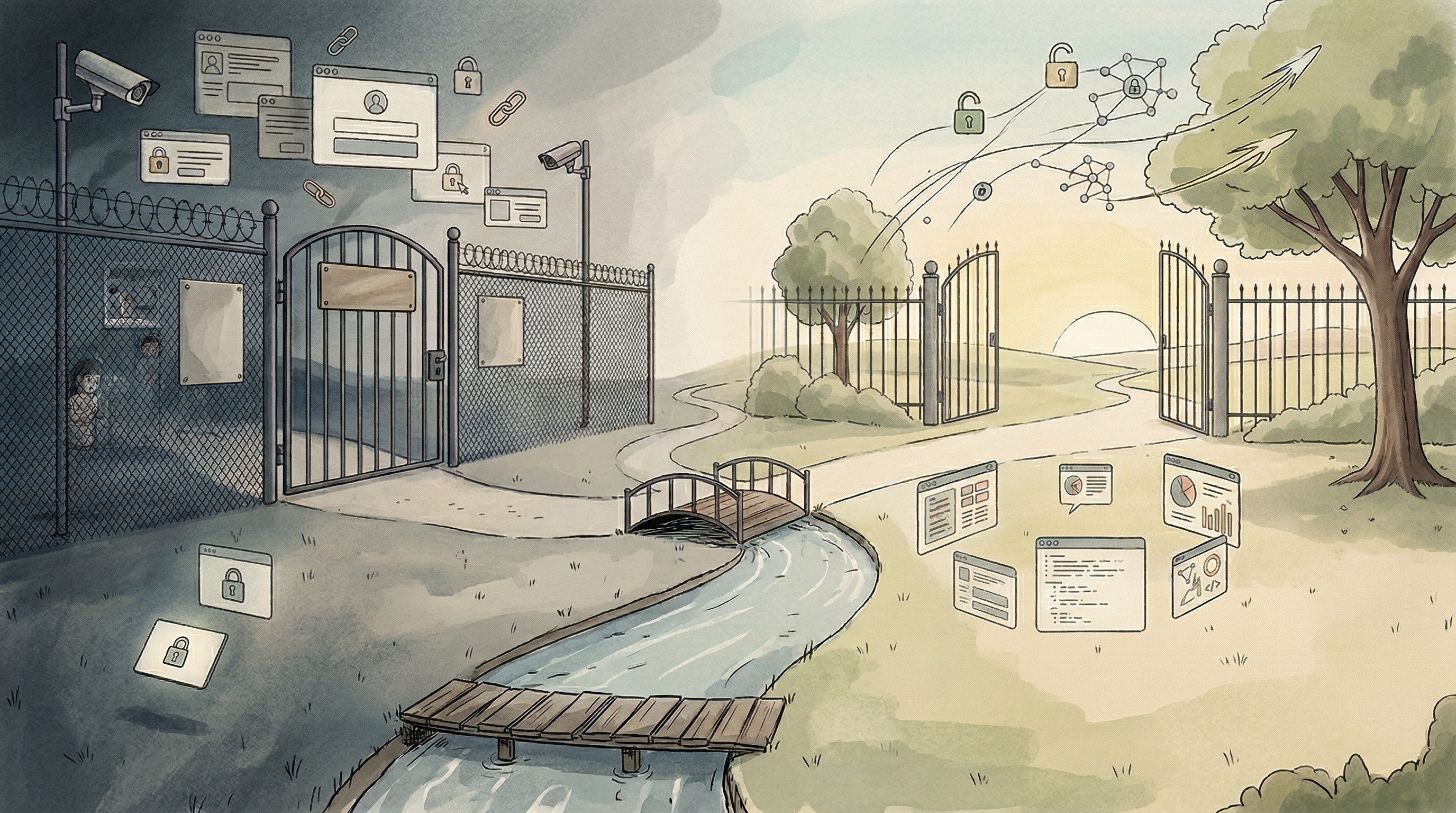
However, with the increasing number of strict regulations and bans, the digital world is being transformed into a space resembling a park with identity checks at the entrance, restricted opening hours, and constant adult surveillance—where freedoms are significantly limited.
Yet, transforming children’s relationship with screens may not lie in restricting the digital, but in enabling and expanding environments where children can exist freely, safely, and collectively in both physical and digital worlds. Research in human-computer interaction and child-centered design also emphasizes that children are not merely users to be protected, but active stakeholders who should have a voice in the design of digital environments.
In this context, the core issue is how to fully interpret the principle of the “best interests of the child” and move beyond viewing children as passive users whose rights are restricted. Instead, we must center their right to participation and create conditions where they can exist as active, free agents, whose rights to play, safety, and participation are secured, in both physical and digital worlds.